
Guilin & Yangshuo Travel Guide 2026: Karst Mountains, Li River & Rice Terraces
There is a famous Chinese saying: “Guilin’s scenery is the best under heaven.” After spending time here, you will understand why the Chinese have been repeating that line for over a thousand years. Hundreds of limestone karst peaks rising straight out of flat green rice paddies, a jade-colored river winding between them, bamboo groves bending in the breeze, and water buffalo grazing along the banks. It looks like a Chinese ink painting come to life — because this is exactly the landscape those paintings were based on.
This guide covers everything you need to plan your trip: the Li River cruise, cycling Yangshuo’s countryside, hiking the Longji rice terraces, where to eat the best rice noodles, and all the practical details that matter.
Why Visit Guilin
Guilin sits in the northeast corner of Guangxi province in southern China. The city itself is pleasant but unremarkable — what makes the region extraordinary is the karst landscape surrounding it. Over 300 million years, geological forces pushed ancient seabeds upward, and then rain and rivers slowly dissolved the limestone into dramatic tower-like peaks. The result: roughly 30,000 karst hills packed into a compact area, with the Li River corridor between Guilin and Yangshuo as the centerpiece, earning UNESCO Global Geopark status.
This is also the scenery printed on the back of China’s 20 yuan banknote — the view near Xingping on the Li River. You can stand in the exact spot and hold up the bill for comparison.
What makes Guilin special:
- World-class karst scenery. The scale, the light, the reflections in the river — cameras cannot fully capture it.
- Manageable pace. Unlike Beijing or Shanghai, Guilin and Yangshuo are small enough to explore without feeling overwhelmed.
- Nature meets culture. River cruises, rice terraces, ancient villages, cave systems, and local cuisine provide enough variety to fill a week.
- Affordable. Compared to China’s big cities, everything here costs less.
Li River Cruise
The Li River cruise from Guilin to Yangshuo is the signature experience of the region. For roughly four hours, you drift past an unbroken procession of karst peaks, fishing villages, bamboo groves, and limestone cliffs reflected in green water.
Full Cruise: Guilin to Yangshuo
The classic cruise departs from Mopanshan Pier (30 minutes south of Guilin center) and ends at Yangshuo town, covering 83 kilometers over 4 to 4.5 hours.
- Price: CNY 215 for a standard seat, or CNY 360-450 for a VIP upper-deck seat with better views. Prices fluctuate by season.
- Departure: Boats leave between 9:00 and 10:30 AM. Arrive at the pier by 8:30 at the latest.
- Included: The boat ride and a basic Chinese lunch (canteen-level — do not expect much).
- Booking: Through your hotel, Trip.com, or a local agency. During peak season (April-May, October), book at least a day in advance.
Tip: Sit on the left side heading downstream for the best views of Nine Horses Mural Hill and the 20-yuan banknote scenery near Xingping.
Short Boat Ride: Xingping Section
If you do not want to spend half the day on a boat, the short cruise along the Xingping section is the highlight reel. This 30-60 minute stretch covers the most iconic portion of the Li River, including the famous 20-yuan banknote viewpoint.
- Price: Around CNY 80-120 per person for a motorized boat.
- Where: Boats depart from Xingping Ancient Town, which is a 30-minute bus ride from Yangshuo.
- Best for: Travelers short on time, or anyone who wants the best scenery without the full four-hour commitment.
Bamboo Raft on Yulong River
For a quieter experience, take a bamboo raft on the Yulong River near Yangshuo instead. The Yulong is narrower, calmer, and far less crowded. You drift past karst peaks and farmland on a motorized bamboo raft with just you and the operator.
- Price: Around CNY 200-260 per raft (fits two people) depending on the section you choose.
- Duration: 1 to 1.5 hours for the most popular sections.
- Note: Children under 1.2 meters and adults over 70 are not permitted on the bamboo rafts — this is a strict safety regulation.
The Yulong River experience is arguably more enjoyable than the main Li River cruise. It is quieter, cheaper per person if traveling as a pair, and the scenery is equally stunning. If you can only do one, strongly consider the Yulong.
Yangshuo — The Backpacker Base
Yangshuo is where the magic happens. This small town 65 kilometers south of Guilin has been a backpacker favorite since the 1980s. It sits in a bowl surrounded by karst peaks on all sides, and the countryside around it offers some of the most beautiful cycling territory in China.

West Street
West Street (Xi Jie) is the main pedestrian street — restaurants, bars, souvenir shops, and cafes catering to both Chinese and foreign tourists. By day, a pleasant place to grab coffee. At night, a lively strip with music and cold beer. It is touristy, but still fun. Just do not spend your entire trip here — the real Yangshuo is out in the countryside.
Cycling the Countryside
Renting a bike and riding through the karst countryside is the single best thing you can do in Yangshuo. No tour bus or river cruise gives you the same sense of immersion.
- Bike rental: A basic bike costs CNY 30-50 per day. An e-bike is CNY 50-80 per day and makes longer routes much more comfortable.
- The classic route: Ride along the Yulong River road toward Baisha village and loop back. Roughly 25-30 kilometers, 3-5 hours at a leisurely pace.
- What you will see: Karst peaks rising from rice paddies, ancient stone bridges, farmers in the fields, water buffalo wading in streams, and very few other tourists once you leave the main road.
Bring water, sunscreen, and your camera.
Rock Climbing
Yangshuo is one of the best rock climbing destinations in Asia. The karst limestone cliffs offer hundreds of bolted sport climbing routes ranging from beginner-friendly 5.8s to world-class overhangs. If you have never climbed before, several outfitters in town offer half-day introductory courses for around CNY 200-350 per person, including gear and instruction.
Impression Liu Sanjie Show
This massive outdoor show takes place on the Li River itself, using the karst mountains as a natural backdrop. Directed by Zhang Yimou (of 2008 Beijing Olympics opening ceremony fame), it features 600+ performers on bamboo rafts, colored lights across the water and mountainsides, and traditional folk music.
- Price: Tickets range from CNY 198 to CNY 680 depending on your seat section.
- Schedule: Shows run nightly at 8:00 PM (weather permitting), but are sometimes cancelled in heavy rain or during the winter off-season. Check availability in advance.
- Duration: About 70 minutes.
Book tickets through your hotel or on Trip.com. The more expensive seats are closer to the water and offer better views, but even the standard seats are impressive.
Longji Rice Terraces
About 100 kilometers north of Guilin, the Longji (Dragon’s Backbone) Rice Terraces are among the most photographed landscapes in southern China — terraced paddies cascading down steep mountainsides, carved out over 600 years by the Zhuang and Yao ethnic minority communities who still farm here today.
Ping’an vs Dazhai
Two main village areas to visit, each with a different character:
Ping’an Terraces:
- More developed, easier to access, and more popular with tour groups.
- Two main viewpoints: Seven Stars with Moon and Nine Dragons and Five Tigers.
- Shorter hikes to the viewpoints (20-40 minutes from the village).
- More accommodation and restaurant options.
- Entry ticket: CNY 80.
Dazhai (Jinkeng) Terraces:
- Larger, more dramatic terraces with higher elevation.
- Three main viewpoints: No. 1 (Xiloushuiyun), No. 2 (Qianqiantianzhu), and No. 3 (Jinfodingtou) — the highest point at around 1,100 meters.
- There is a cable car to Viewpoint No. 3 for CNY 100 round trip, which saves about two hours of hiking.
- Fewer tour groups, more authentic village atmosphere, especially if you stay overnight.
- Entry ticket: CNY 80 (same price as Ping’an).
My recommendation: If you have time for only one, choose Dazhai. The terraces are more impressive, the viewpoints are more varied, and staying overnight in the village is a memorable experience. If you are short on time or have limited mobility, Ping’an is easier to navigate.
Hiking Routes
Both villages offer hikes ranging from easy 30-minute walks to full-day treks:
- Ping’an loop: A 2-3 hour circuit hitting both major viewpoints. Well-signed, mostly paved or stone-stepped paths.
- Dazhai viewpoint hike: Walking from the village to Viewpoint No. 3 takes about 1.5-2 hours uphill. The path is steep in sections but manageable for anyone with reasonable fitness.
- Ping’an to Dazhai trek: An adventurous 4-5 hour hike connecting the two terrace areas through remote countryside. You will need a basic sense of direction or a GPS track downloaded to your phone.
Overnight Stay
Staying one night in a village guesthouse is highly recommended. The terraces look completely different at sunrise and sunset, and day-trippers miss both. Guesthouses are simple but comfortable — clean beds, hot water, and often a balcony with stunning views.
- Price: CNY 100-300 per night depending on room and season.
- Food: Home-cooked meals at guesthouses. Dinner and breakfast run about CNY 40-80 per person.
Getting to Longji
Shuttle buses from Guilin Qintan bus station take 2 to 2.5 hours and cost around CNY 40-50 one way. Many Guilin hotels also organize transport for similar prices. From Yangshuo, you will need to return to Guilin first.
Other Attractions
Reed Flute Cave
A limestone cave system 5 kilometers from Guilin center with a 1,200-year history as a tourist attraction — Tang Dynasty ink inscriptions still line the walls. Massive stalactites and stalagmites are lit with colorful LEDs. The lighting is over-the-top, but the formations are genuinely impressive. Entry: CNY 90. About 45-60 minutes.
Elephant Trunk Hill
Guilin’s most recognizable landmark — a hill shaped like an elephant dipping its trunk into the Li River. Entry: CNY 70. You can see the hill clearly from the river bank for free; paying gets you closer and into a small cave inside the “trunk.”
Seven Star Park
Guilin’s largest park, named for seven peaks arranged like the Big Dipper. Caves, pavilions, and green space make for a nice morning walk, though not a must-see if time is limited. Entry: CNY 55.
Two Rivers Four Lakes Night Cruise
A boat cruise along the lakes and waterways winding through Guilin center, passing ornate bridges and illuminated pagodas. The karst peaks silhouetted at night with neon reflections on the water make for a beautiful evening. CNY 190-290, about 90 minutes, nightly from 7:30 PM.
Guilin Food Guide
The food here belongs to the broader Guangxi culinary tradition — lighter and more rice-based than Sichuan, unpretentious, and remarkably cheap.
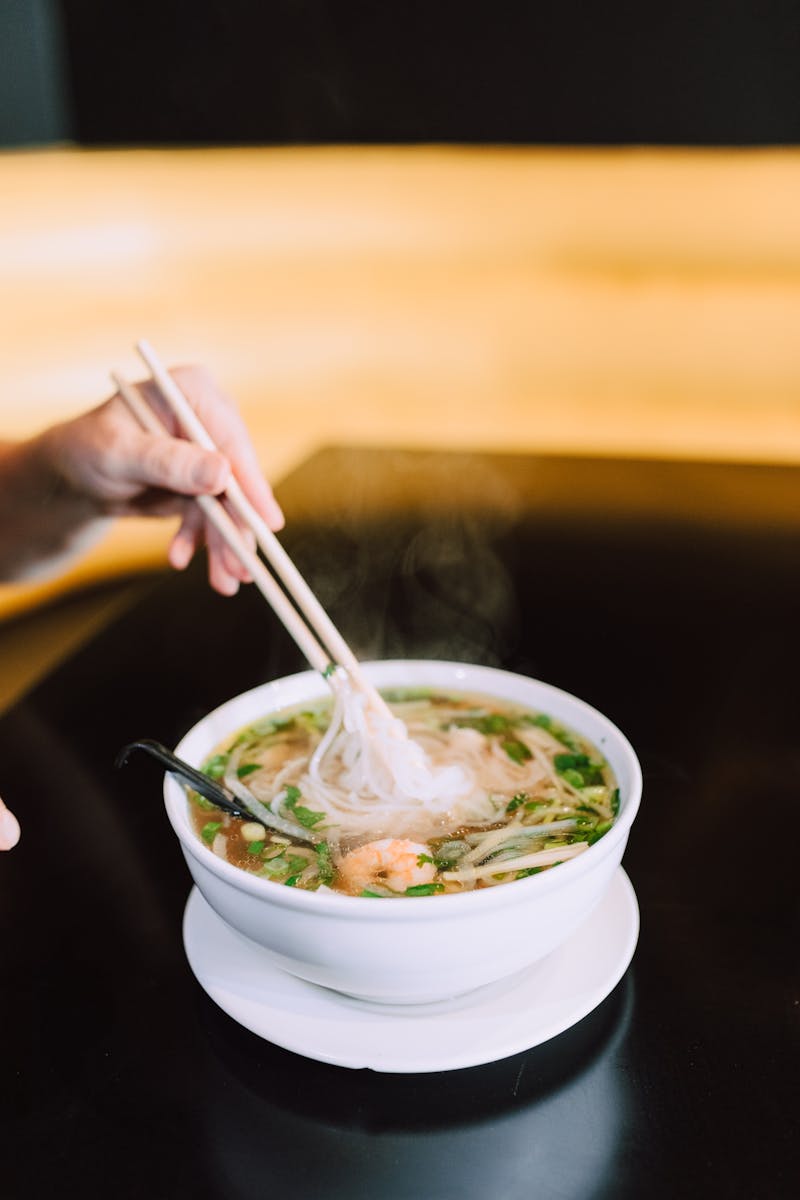
Guilin Rice Noodles (Guilin Mifen)
The one thing you absolutely must eat, ideally multiple times a day. Smooth, silky rice noodles in a light savory broth with braised meat (usually beef, pork, and liver), pickled beans, scallions, chili, and crispy fried peanuts. You add condiments yourself — vinegar, chili oil, pickled vegetables — until it tastes right.
- Price: CNY 8-15 for a bowl. The best mifen shops are tiny local places with plastic stools and lines out the door at 7 AM.
- Pro tip: Order “dry” noodles (gan ban fen) for a version without broth where the sauce coats every strand.
Yangshuo Beer Fish
A whole fresh river fish pan-fried until crispy, then braised in local beer, tomatoes, peppers, garlic, and soy. The sauce is rich and tangy. CNY 60-100 per dish. The best versions are at local restaurants away from the West Street tourist strip.
Stuffed Li River Snails
Large river snails stuffed with minced pork, mint, perilla leaf, star anise, and chili, simmered in spiced broth. Messy, fun, and delicious. CNY 15-25 for a plate.
Oil Tea (You Cha)
A traditional drink of the Yao and Dong minorities. Tea leaves pounded with ginger, garlic, and salt, fried in oil, then combined with boiling water to create a savory, warming tea-soup served with puffed rice and fried peanuts. An acquired taste — the first sip might be a shock — but a genuine cultural experience found at specialty shops and Longji village guesthouses. CNY 10-20 per serving.
For more on eating your way through China, see our street food guide.
Getting Around
Guilin to Yangshuo
You have three options:
- Li River cruise (see above) — The scenic way to get there. About 4 hours, one-way, arriving in Yangshuo town.
- Direct bus — Buses run every 15-20 minutes from Guilin bus station to Yangshuo. The ride takes about 1.5 hours and costs CNY 25-40. This is the cheapest and fastest option if you plan to do the Li River cruise separately or not at all.
- Private car / taxi — About 1.5 hours, costing CNY 200-300 for the car. Convenient if you have a group or luggage. You can book a car through Didi, though finding a driver willing to make the inter-city trip is easier through your hotel.
Getting Around Yangshuo
Yangshuo town is small enough to walk everywhere. For the countryside, rent a bike or e-bike (see the cycling section above). Taxis and e-bike taxis are available for trips to specific attractions. There are also local buses running to Xingping and other nearby towns for CNY 5-10.
Guilin Airport
Guilin Liangjiang International Airport (KWL) has direct flights to most major Chinese cities and some Southeast Asian capitals.
- Airport to Guilin center: Airport bus CNY 20 (40 minutes). Taxi or Didi about CNY 100-130.
- Airport to Yangshuo: Direct bus CNY 50 (1.5 hours). Private car CNY 250-350.
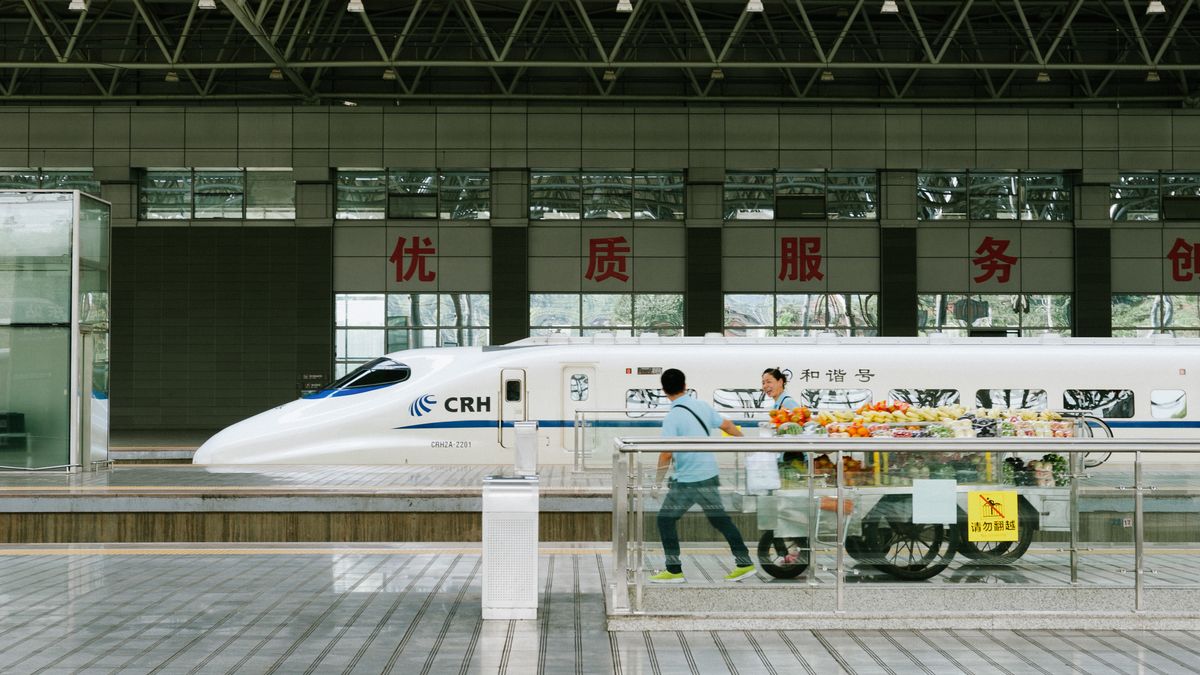
High-Speed Rail
Guilin has two main stations: Guilin Station (city center) and Guilin North Station (main high-speed rail hub, 20 minutes north by taxi). Key routes:
- Guangzhou to Guilin: About 2.5-3 hours, second-class tickets around CNY 200-260.
- Shenzhen to Guilin: About 3-3.5 hours, second-class around CNY 250-300.
- Guilin to Chengdu: About 5 hours, second-class around CNY 350-450.
- Guilin to Kunming: About 4-5 hours, second-class around CNY 280-380.
Yangshuo also has its own high-speed rail station (Yangshuo Station), but it is located about 30 minutes outside the town. A shuttle bus connects the station to Yangshuo town center for CNY 20.
For booking tips and how to navigate the system, check out our guide to buying train tickets in China.
Best Areas to Stay
Guilin City Center
Most visitors spend one or two nights in Guilin. The best area is around Zhengyang Road pedestrian street and Shan Lake / Rong Lake — walking distance to restaurants, the Two Rivers Four Lakes area, and the bus station.
- Budget: CNY 80-200 per night for hostels and basic hotels.
- Mid-range: CNY 250-500 per night for 3-4 star hotels. The Shangri-La and Sheraton both have riverside locations with karst views.
- Booking: Use Trip.com or Booking.com. Confirm foreign passport holders are accepted when booking.
Yangshuo West Street Area
Stay within walking distance of West Street for restaurants, bars, and river access.
- Budget: Dorms CNY 50-100, private rooms CNY 150-250.
- Mid-range: Boutique hotels with karst-view balconies from CNY 300-600 per night — waking up to limestone peaks from your balcony for under $80 is exceptional value.
- Splurge: Li River or Yulong River resorts from CNY 800-1,500 per night.
Alternative: Stay near the Yulong River for a quieter experience. Guesthouses on the riverbank offer better scenery at the cost of West Street convenience.
Longji Village Guesthouses
If you visit the rice terraces, spend the night. Sunset and sunrise over the terraces from your guesthouse balcony are unforgettable. CNY 100-300 per night for simple rooms with clean beds, hot showers, and balconies. Book ahead during golden weeks and peak autumn.
For setting up mobile payment before your trip, read our payment guide.
Practical Tips
Best Time to Visit
- March to May (spring): Warm, green, and the river levels are good for cruises. Rice terraces are being flooded and planted in April-May, creating a mirror-like effect on the hillsides. This is arguably the most beautiful season.
- September to November (autumn): The rice terraces turn golden as harvest approaches (September-October), the weather is comfortable, and summer crowds have thinned out. The best all-around time for a visit.
- June to August (summer): Hot and humid with temperatures hitting 35 degrees Celsius or higher. This is also the rainy season, which means the river is at its highest — great for boat rides, but downpours are frequent and can disrupt plans. Mosquitoes are aggressive.
- December to February (winter): Cool and often overcast. Some attractions reduce hours or close. The terraces are bare and brown. Not the ideal time, but hotel prices drop significantly, and you will have the scenery mostly to yourself.
Rain and Weather
Significant rainfall from April through July means a rain jacket and waterproof bag are essential. The upside: rain creates low-hanging mist around the karst peaks, and some of the best Li River photos are taken on drizzly days.
Mosquitoes
From May through October, mosquitoes are aggressive near rivers and in terrace villages. Bring repellent with DEET or picaridin. Long sleeves in the evening help.
Cash vs Mobile Payment
In Guilin and Yangshuo, Alipay and WeChat Pay work everywhere and now support international credit cards. Set these up before your trip — our payment guide walks you through it. However, carry cash when visiting the rice terraces and smaller villages. Some rural guesthouses and restaurants do not accept mobile payments, and ATMs are scarce outside towns.
Connectivity
Get an eSIM before arriving in China — Google Maps, translation apps, and messaging apps are all blocked on Chinese WiFi without one. Signal can be weak in terrace villages, so download offline maps in advance.
Language
Expect zero English outside tourist-facing businesses in Yangshuo. Download Google Translate with the Chinese offline pack. The camera translation feature (point at menus and signs) will save you daily.
Suggested Itineraries
3-Day Itinerary: Guilin and Yangshuo
Day 1 — Guilin arrival. Check into your hotel near the city center. Visit Elephant Trunk Hill and walk along the lakeside. Evening: Two Rivers Four Lakes night cruise. Eat your first bowl of Guilin rice noodles at a busy local spot near Zhengyang Road.
Day 2 — Li River cruise to Yangshuo. Morning Li River cruise to Yangshuo (4 hours). Afternoon: explore West Street and the riverside. Evening: Impression Liu Sanjie show or beer fish dinner on West Street.
Day 3 — Yangshuo countryside, then depart. Rent a bike or e-bike and ride the Yulong River loop (3-4 hours), stopping at stone bridges and viewpoints. Lunch in Yangshuo, then bus back to Guilin (1.5 hours) or depart from Yangshuo’s high-speed rail station.
5-Day Itinerary: Guilin, Yangshuo, and Longji Rice Terraces
Day 1 — Guilin arrival. Visit Reed Flute Cave (close to the airport road — stop on the way in). Walk along the city center lakes, eat rice noodles, and take the night cruise if weather is good.
Day 2 — Longji Rice Terraces. Morning shuttle to Dazhai (2.5 hours). Check into a village guesthouse. Hike to Viewpoints No. 1 and No. 2, or cable car to No. 3. Sunset over the terraces. Home-cooked dinner and oil tea at the guesthouse.
Day 3 — Longji sunrise, then Yangshuo. Early sunrise over the terraces. Shuttle back to Guilin by midday, then bus to Yangshuo (1.5 hours). Explore West Street in the afternoon.
Day 4 — Yangshuo full day. Morning: bike the Yulong River countryside loop (3-4 hours). Afternoon: bamboo raft on the Yulong River. Evening: Impression Liu Sanjie show or beer fish dinner with cold Liquan beer.
Day 5 — Xingping and departure. Bus to Xingping Ancient Town (30 minutes). Short boat ride to see the 20-yuan banknote view, hike the hilltop viewpoint (30 minutes). Return to Yangshuo for lunch, then depart via Guilin or Yangshuo’s high-speed rail station.
Guilin and Yangshuo reward slow travel. The temptation is to rush through the highlights on a packed two-day tour, but this landscape is best absorbed at the pace of a drifting bamboo raft or a lazy bike ride through the rice paddies. Give yourself time to take in a view that has inspired poets and painters for a thousand years.
Frequently Asked Questions
Is the Li River cruise worth it?
Absolutely. The 4-hour cruise from Guilin to Yangshuo passes through iconic karst mountain scenery that appears on the 20 RMB banknote. Book a 4-star boat for the best experience.
How do I get from Guilin to Yangshuo?
Options include the Li River cruise (4 hours, scenic), high-speed bus (1.5 hours, frequent), or hire a private car. Most visitors take the cruise one way and bus back.